lizbrownlee – poet

Poetry fun, news, info, play… plus Lola the alert dog!

The End has come…

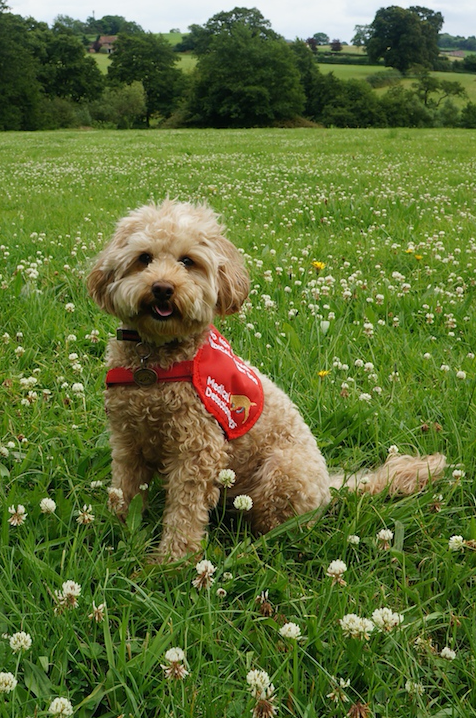
DSC02733.

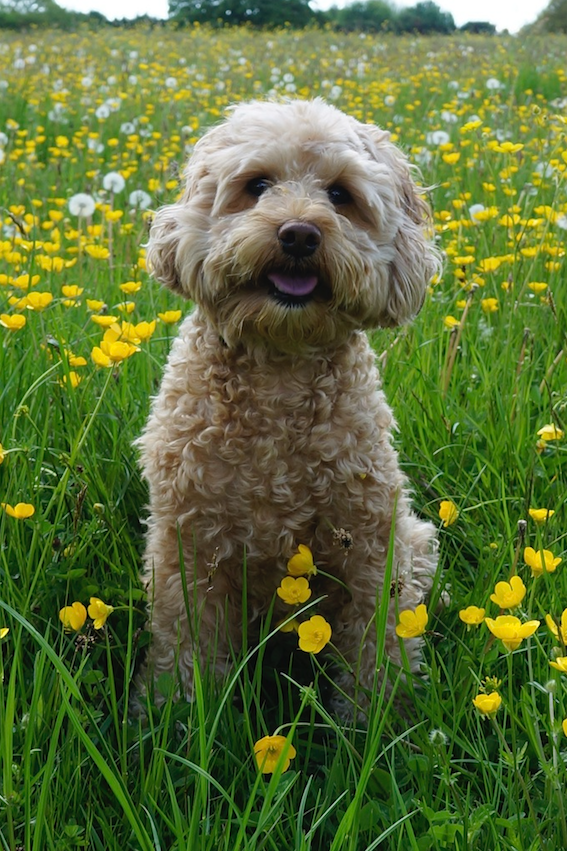
This is Lola, with the first buttercup of the year today in the field behind our house.

While the A-Z Challenge has been on, we have been on an hour walk a day. Today, Lola got an hour and a half, and she is very happy that the END has come.

I’m not! I have really enjoyed myself – last year my book was published in April and everyone thought I’d taken leave of my senses taking this on as well, but I managed.

And this year too,  I was appearing at the Cheltenham Poetry Festival, so like last year I started off by doing two posts a day and scheduling them – now this was hard when I was writing a poem and drawing and researching, but somehow I managed it, with some of the poems linked to photos instead!

Dear A-Z Bloggers, thank you for your comments and your varied and fabulous blogs, I wish I’d had more time to see all of them!

But I wish even more that all Blogger sites would accept my comments! Some do – those where a window appears to put details in. I can comment on those blogs, how wonderful! But the ones where there is just a list no…

I went so far as to get advice from the great and generous Arlee Bird on this issue. He replied in full – suggesting that I make a Blogger Blog to get round this problem. I did. I now have a blogger blog.

But this work-around did not work. Still unable to comment. I have left about I’d say 30 comments on blogs where my words just disappeared, which is very demoralising.

Anyhow – thank you for those follows, those comments, the appreciation, the fun!

Until next year! ~Liz xxx

Z is for Zoe Waterfall Damselfly

damsel copy 2

.

Zoe Waterfall Damselfly

.

It is possible

to fly

on invisible

wings

.

if you weigh

the sum

of sight

and colour

.

a simple

lightness

.

mist

to the water

falling

.

even the

irresistible

river

loses hold

of its dance,

flows on -

.

but the

delicate

damselfly

can carry the sun

.

Liz Brownlee

.

Ah! The very last entry in this years A-Z blog Challenge.

The Zoe Waterfall damselfly is endemic to north-east Mexico.

It is exceptionally beautiful with long clear wings that have black tips with a blue stripe. Although occasionally some of them have entirely black wings.

As adults they are voracious predators on flying insects, using their huge black eyes which are specialised to detect movement.

Not a lot is known about this damselfly – and it is classed as Vulnerable by the IUCN Red List of Threatened Species because of the deforestation of its high forest habitats.

© Liz Brownlee

IUCN Red List here.

If you’d like to blog hop to another A-Z Challenge Blog, please press here.

Y is for Yap Flying Fox

Yap flying fox photo - Pteropus yapensis - G73462 - ARKive-1

Image by patrik@patrik.com on the ARKive website, to visit site click here.

.

Yap Flying Fox

.

As evening cools,

the air infused

with ripeness calls -

.

they lift their heads

from folded arms,

.

stretch fingers into wings,

let loose to fall and fly

the perfumed routes,

.

finding fig-full skies

to perch and climb

and suck sweet pink,

.

until it’s time

to fold to roost,

.

bright eyed

and sticky in the trees

as juice-soft fruits.

.

Yap flying foxes are red-furred bats with pointed faces and large, bright, intelligent eyes.

They live on 4 small adjoining islands of Yap in the Federated States of Micronesia. They inhabit mangroves, forests and agroforests. Agroforests are managed forests planted with trees, shrubs and crops, so that some wildlife can still survive in it.

Flying foxes squeeze the juice from ripe fruits in the roof of their mouths and spit out the pulp. After a night foraging for fruit, they have to clean their fur of the stickiness!

These bats used to be eaten as a delicacy and their numbers were at one time as low as 1,000, but they are doing a little better now hunting has stopped.

However, they are still listed as Vulnerable by the IUCN Red List of  Threatened Species as they live all in one place, and any natural disaster such as a typhoon, or a large loss of habitat could affect them very badly.

© Information excepting image from IUCN . Poem © Liz Brownlee

If you would like to blog hop to another A-Z Challenge Blog please press here.

X is for Xenopus Frog

Xenopus longipes1 copy.

Xenopus Longipes

.

Volcano Oku

is long silent

.

and in its

sacred lake

.

a tongueless frog

arms stretched wide

in welcome

.

is the guardian

of its own ghosts

with no expression

.

until perhaps

the volcano

speaks again

.

Xenopus longipes, the Lake Oku clawed frog, lives in western Cameroon, high on the extinct volcano Mount Oku, in one lake that is held in an old volcano vent.

It is surrounded by montane forest.

The local people hold the lake sacred, which is lucky for the frogs, as the introduction of fish, always a possibility to feed an increasing population, would certainly be their demise.

These frogs live in the lake their whole lives. They are tongueless and feed by using their outstretched arms to feel for prey, and then use their hands to guide it to their mouths where it is drawn in by suction.

This frog is biologically extraordinary – instead of one pair of chromosomes in each cell of its body it has 12 pairs of chromosomes. Usually every organism has two sets of chromosomes, one inherited from the mother and one from the father.

If a species hybridizes or manages to breed with another species, where the chromosomes are of differing lengths, very rarely the chromosomes double, so that there are 4 of each instead of 2 . 12 chromosomes is incredibly rare.

Perhaps the frogs (which are the only frogs of this species in the lake now) bred with more than one other species a long time ago.

Species which have more than one set of chromosomes are known as polyploid. 12 sets of chromosomes makes this frog dodecaploid.

This gives it an evolutionary  advantage as it will have many more choices of genes that would otherwise be unavailable to it. This might mean being able to cope with changes in environment more quickly than an individual with only two sets of chromosomes to choose from.

If the volcano erupted and the acidity of the water changed for instance, this might, if it did not kill them straight away, give them a better chance of survival.

But still these frogs will contain a great many silenced genes which are not expressed for generations – features of the frogs with whom they hybridised.

I will just say that much of what I was reading today about this was a complete mystery to me – above the bare facts I have been very suppositional.

.

© Liz Brownlee

If you would like to blog hop to another A-Z Challenge Blog, please press here.

W is for Wolf

SONY DSC

Taken by Spencer77 on Flikr, permission granted, link to his photos here.

.

Maned Wolf

.

The maned wolf’s head

is all points

it knows the way

even when the wind

in the grass

is lost

.

it flickers through

the pampas

 under the stars

.

all long legs

like a sunset shadow

.

 tail a

plume of smoke

.

Liz Brownlee

.

Maned wolves look like foxes with foal legs – and they are not wolves at all. They are related more closely to an ancient dog ancestor which also gave rise to types of South American foxes.

Their legs look out of proportion – they are about three feet tall, the largest canid in South America.

They are carnivores that hunt for small prey in the evening before midnight. They hunt alone, and mark their territory like a dog with urine – which has a peculiar smell, rather like cannabis.

Threats include habitat loss, disease from domestic dogs and being run over. They are classed as Near Threatened.

All material except photo © Liz Brownlee

If you’d like to blog hop to another A-Z Challenge Blog, please press here. 

V is for Vitelline Warbler

Vitelline-warbler-in-songImage taken by Michael Gore on ARKive, to go to site press here.

.

Vitelline Warbler

.

She knows,

fleeting the leaves

on soft flick

wings

.

seeking

waving legs

among,

.

the beauty

of light

upon her,

.

she must stop

to sing

.

fling skyward

.

her answer

to the sun

.

Liz Brownlee

.

Vitelline warblers live only on the Caymen Islands, in woodland and scrub.

Exceptionally beautiful, they look like little splinters of sun singing in the trees, with a characteristic tsu tsu tsu tsu tsooooo sound.

They eat insects they find in the leaves and stems, often foraging at low height.

Not a lot is known for sure about this little bird as it has not been studied; so its precise diet, beyond that of insects, is unknown.

It lives in a small area, on islands where land development is proposed, and is classified as Near Threatened.

All material © Liz Brownlee

If you’d like to blog hop to another A-Z Challenge Blog, press here.

U is for Unexpected Cotton Rat

Unexpected rat for blog

.

The Unexpected Cotton Rat Lament

.

I am a cotton rat,

and like a common rat

I am yellow-toothed and fat -

my good points are neglected,

when crops are nibbled

I’m suspected,

it’s no joke

the persecution

to which we’re all subjected,

there’s not a lot that’s

unexpected about that.

.

I am a cotton rat,

and like a common rat,

prey to owl and fox and cat -

our rights are not respected,

we’re used for research

and infected,

it’s no joke

being captured then

injected and dissected,

there’s not a lot that’s

unexpected about that.

.

But unlike a common rat,

I’m a special cotton rat that

likes mountain habitat -

my trees, streams, marsh affected

by farms – and more farms

are projected,

it’s no joke

that we are rare and

maybe need to be protected,

there’s not a lot of

‘unexpected cotton rats’.

.

Cotton Rats live in North America, Central America and South America, and are called cotton rats because they use cotton where it is available to build their nests, damaging crops in the process. They are a pest, eating many types of food crops, and can carry disease.

One type of cotton rat is known for being experimented on for polio research.

The unexpected cotton rat only lives very high in mountains in Ecuador, 3500 to 4000 m above sea level, in a few locations.

It’s habitat is threatened by agriculture and deforestation and its population is declining – it is listed as Vulnerable.

And because it is so inacessible, not much else is known about it.

I could not find out why it is called the ‘unexpected’ cotton rat. It intrigues me so I have written to an expert, but he has not replied yet. I’ll amend this entry when I find out!

NEWSFLASH!

I have received a lovely email from Dr Robert M Timm, Associate Professor of Ecology and Evolutionary Biology and Curator of Mammals at the University of Kansas. He says that: “Cotton rat is really a misnomer as it is only the species living in the U.S. that lives in cotton fields and it is in fact much more widely distributed and occurring far further north than does cotton. Now all species in the genus Sigmodon have cotton rat as part of their common name.”

This cotton rat’s Latin name is Sigmodon inopinatus. It will have been classed in  this genus because of physical features and behaviour it shares with other Sigmodon species.

Dr Timm went on to say: “I suspect that this southern most species of Sigmodon has the common name unexpected because it wasn’t originally believed that this genus occurred that far south.”

So there you have it! The most likely reason for the unexpected name of the unexpected cotton (although it doesn’t live in cotton) rat!

Thank you Dr Robert M Timm!

.

All material © Liz Brownlee

If you would like to blog hop to another A-Z Challenge blog, please press here.

T is for Tiger

I have posted this picture before – but not the blog or poem.

crack tiger bestTiger

.

You who

are meant

as part of

the forest,

marked in each

sleek stretch

of soft-pawed pace

bold black

like the living trees

against the sun,

no matter

how deep

you go,

as each tree falls,

your stripes,

your bones

also.

.

Liz Brownlee

.

Sumatran tigers are critically endangered. They live in the same forests as Sumatran orangutans, also critically endangered. 80% of the forests they live in have been cut down. There are only 400 of these tigers left.

They are particularly interesting as they have some markers that show that they are genetically different from tigers on the mainland.

Not only is their forest being cut down for palm oil production, poaching is still at high levels, to feed the desire in Asian countries for tiger parts for medicines etc.

Palm oil is a cheap filler used in animal foods and also extraordinary numbers of supermarket products. EIGHT out of TEN products in UK supermarkets (and probably all supermarkets all over the world) contain palm oil, including things like Kitkats and washing powder. A report in the Independent newspaper stated that it’s in the top three loaves, most biscuits including McVities, Cadbury’s dairy milk chocolate, many cereals, Utterly Butterly and many other spreads…

All of us are contributing to the loss of forest that is killing tigers, orangutans and all the creatures that live there.

Customers have a huge power to change. Ask questions. Email manufacturers demanding that they use sustainable oils in their products – it is often hidden under the term ‘vegetable oil’ in the list of ingredients. If ‘vegetable oil’ is listed and it doesn’t say which oil in particular ask the manufacturer what they use. Let them know you care.

All material © Liz Brownlee

If you’d like to blog hop to another A-Z Challenge Blog please press here.

S is for Spider monkey

Spider_monkey_-Belize_Zoo-8b

Spider Monkey, taken by Michael Schamis, under creative common license here.

.

Spider Monkey

(Written for Bristol Zoo 21013, up in the monkey house)

.

Said spider monkey to the fly,

I love to leap from branch to sky,

.

and stop to look and hook my tail

upon a branch along my trail

.

to hang around and search for seeds

or tasty nuts among the leaves,

.

I pluck and suck the juice from fruits

and nibble green and tender shoots,

.

I chase and tumble and trapeze

all arms and legs and tail through trees,

.

and every whoop and wail and call

says all I’ll ever want at all

.

is space to play among the stems

and wrap my arms round monkey friends.

.

Liz Brownlee

.

Spider monkey live in Centra America in rain, dry and mangrove forests.

They are trapeze artists. They swing through the trees with their extra long limbs and prehensile tail working as a fifth limb so quickly they look like spiders – and even more so when they hang from their tail to pick fruit, seeds, leaves and flowers to eat.

Of the nine subspecies of spider monkey, seven are endangered, two critically. They are killed for food, they lose habitat to logging, they are caught for the pet trade.

Spider monkeys are very social –  they split up during the day into groups to hunt for food, but their reunions are noisy and affectionate with lots of hugging.

If you live in the UK, you can visit the variegated spider monkey Atelus hybridus at Bristol Zoo.

.

All material © Liz Brownlee

If you’d like to blog hop to another A-Z Challenge blog please press here.

R for Rat

Naked Mole Rat

.

Yes, we’re

BALD,

Butt naked,

and

BARE.

.

We have no clothes,

we have no hair,

and we don’t care.

.

We’re NUDE.

Not a stitch.

In the

BUFF.

.

To be honest, love,

we just can’t get

STARKERS enough.

.

EXPOSED,

IN THE RAW,

and

WRINKLY.

.

In the absolute

PINK!

.

And we’re gorgeous,

don’t you think?

.

Liz Brownlee

.

nmr

Photo courtesy of Smithsonian Institute, creative commons license (202) 633-3055

.

I am very fond of naked mole rats. They live in semi-arid regions of eastern Africa in burrows.

They are pink, hairless and have revolting personal habits, such as rolling in their toilet chamber. Then they smell like all their relatives, and intruders are easier to spot. Because naked mole rats do tend to look rather similar to each other.

Their long, yellow teeth grow outside their lips; so they can gnaw roots and tubers they eat without too much soil going in their mouths.

And although they are naked everywhere else, they do have hair growing somewhere rather unusual. INSIDE their mouths. It hangs like a curtain and is also helpful at keeping soil from being swallowed.

They are unique as mammals in they live in a colony where only one female is allowed to breed. All the rest of the mole rats are divided into army or workers, just like bees.

Because only one of them is allowed to breed all the mole rats are related – and their DNA carries hardly any variation. They all have more red blood cells than normal to enable them to survive in their sealed, airless burrows.

And despite them all being related, and packed in all together, diseases, including cancer, have never been found in naked mole rats, even those kept in captivity.

So you see, besides being rather gorgeous, they are also extremely special.

.

All material except photo © Liz Brownlee

If you’d like to blog hop to another A-Z Challenge Blog, please press here.

Follow

Get every new post delivered to your Inbox.

Join 492 other followers